Hybrid work has become the dominant workplace model for modern organizations. Instead of choosing between remote work and office work, a hybrid setup combines both—giving employees flexibility while maintaining opportunities for collaboration.
According to Gallup, 6 in 10 employees want a flexible work arrangement, making it the most popular work model today. Workplace flexibility is no longer a trend—it is a long-term shift in how organizations operate. At the same time, companies are redesigning offices, policies, and tools to support employees more effectively.
However, flexibility alone is not enough. Without clear policies, the right tools, and consistent communication, organizations can face coordination issues, uneven employee experiences, and avoidable friction.
In this guide, you will learn:
- What hybrid work is
- The main benefits
- Common challenges and how to solve them
- How to make it successful
What is Hybrid Work?
Hybrid work is a flexible work model where employees divide their time between working remotely and working from the office. It helps organizations balance flexibility, productivity, and changing employee expectations.
In a well-designed hybrid workplace:
- Remote work is used for focus and individual tasks
Remote work allows employees to perform deep, uninterrupted work without the distractions often found in office environments. Research from Stanford shows that employees are more productive when they can control their environment and work during their peak focus hours. This is one of the reasons a flexible work model can improve efficiency across many roles. - Office time is used for collaboration, meetings, and team interaction
The office becomes a space for collaboration rather than individual work. Employees use office time for brainstorming, team meetings, and social interaction—activities that benefit from physical presence and real-time communication.
This setup allows organizations to balance productivity and flexibility while adapting to changing employee expectations. Research from Stanford shows that a hybrid workplace improves job satisfaction and reduces quit rates by up to 33% without lowering productivity.
The Benefits of Flexible Work
A hybrid workplace improves flexibility and employee satisfaction
A flexible workplace gives employees more control over where and how they work. According to Microsoft, 70% of employees want flexible work options to continue, showing that this model is no longer a perk but an expectation.
This makes flexible work a key driver of:
- Employee satisfaction
Employees who can choose where they work tend to report higher job satisfaction because they can better balance personal and professional responsibilities. - Talent attraction
Organizations offering flexible work are more attractive to top talent, especially in competitive industries where flexibility is a key differentiator. - Retention
Employees are more likely to stay with companies that offer hybrid work, reducing recruitment and onboarding costs.
If you want to explore this topic further, our guide on how to offer workplace flexibility explains how flexible schedules, clear expectations, and workplace technology can work together.
A hybrid approach can improve retention without reducing performance
One of the strongest arguments for a flexible workplace comes from real-world data.
A large-scale study found that a flexible work model:
- Reduced employee attrition by 33%
Employees in hybrid teams were significantly less likely to leave their jobs, making it a powerful retention tool. - Maintained productivity levels
Despite fewer days in the office, performance grades were unchanged, showing that a hybrid approach does not negatively impact output. - Increased job satisfaction
Employees reported higher levels of satisfaction due to increased flexibility and autonomy.
This proves that the hybrid model can support both business outcomes and employee wellbeing.
Reduced commuting improves productivity and wellbeing
Remote work reduces commuting time, which can improve both productivity and wellbeing. The OECD notes that the ideal hybrid work arrangement is often around two to three days per week because it balances reduced commuting and fewer distractions with the benefits of in-person collaboration. A large-scale study published in Nature also found that flexible work improved job satisfaction and reduced attrition by one-third without lowering performance.
In hybrid work environments, employees often:
- Spend less time traveling
Reduced commuting saves hours each week, giving employees more time for both work and personal life. - Have more time for focused work
Without long commutes, employees can start work earlier or dedicate more time to high-priority tasks. - Experience less daily stress
Commuting is a major source of stress, and reducing it improves overall wellbeing and job satisfaction.
Offices can be used more effectively
A hybrid workplace allows companies to rethink how office space is used.
Instead of fixed desks, flexible work environments prioritize:
- Collaboration
Office spaces are redesigned to support teamwork, brainstorming, and group discussions rather than individual work. - Meetings
Meeting rooms become central to the workplace, supporting both in-person and hybrid meetings. - Team interaction
Offices become social hubs where employees connect, build relationships, and strengthen company culture.
Learn more about how workplace analytics can help optimize office space and improve utilization. For companies dealing with unused desks or uneven weekly attendance, desk hoteling can help make office space more flexible, efficient, and aligned with real demand.
Common Challenges and How to Solve Them
1. Flexible Work Makes Collaboration More Complex
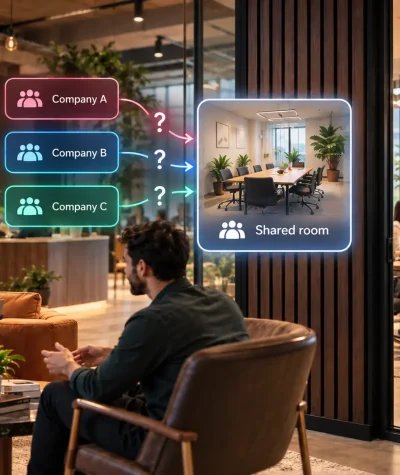
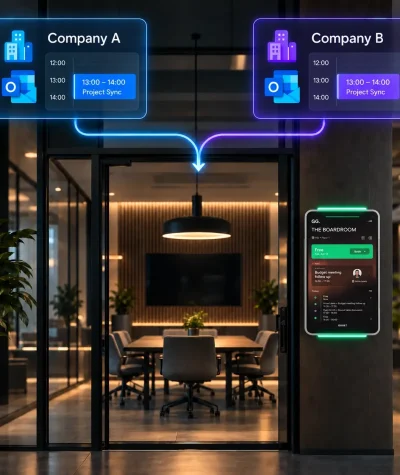
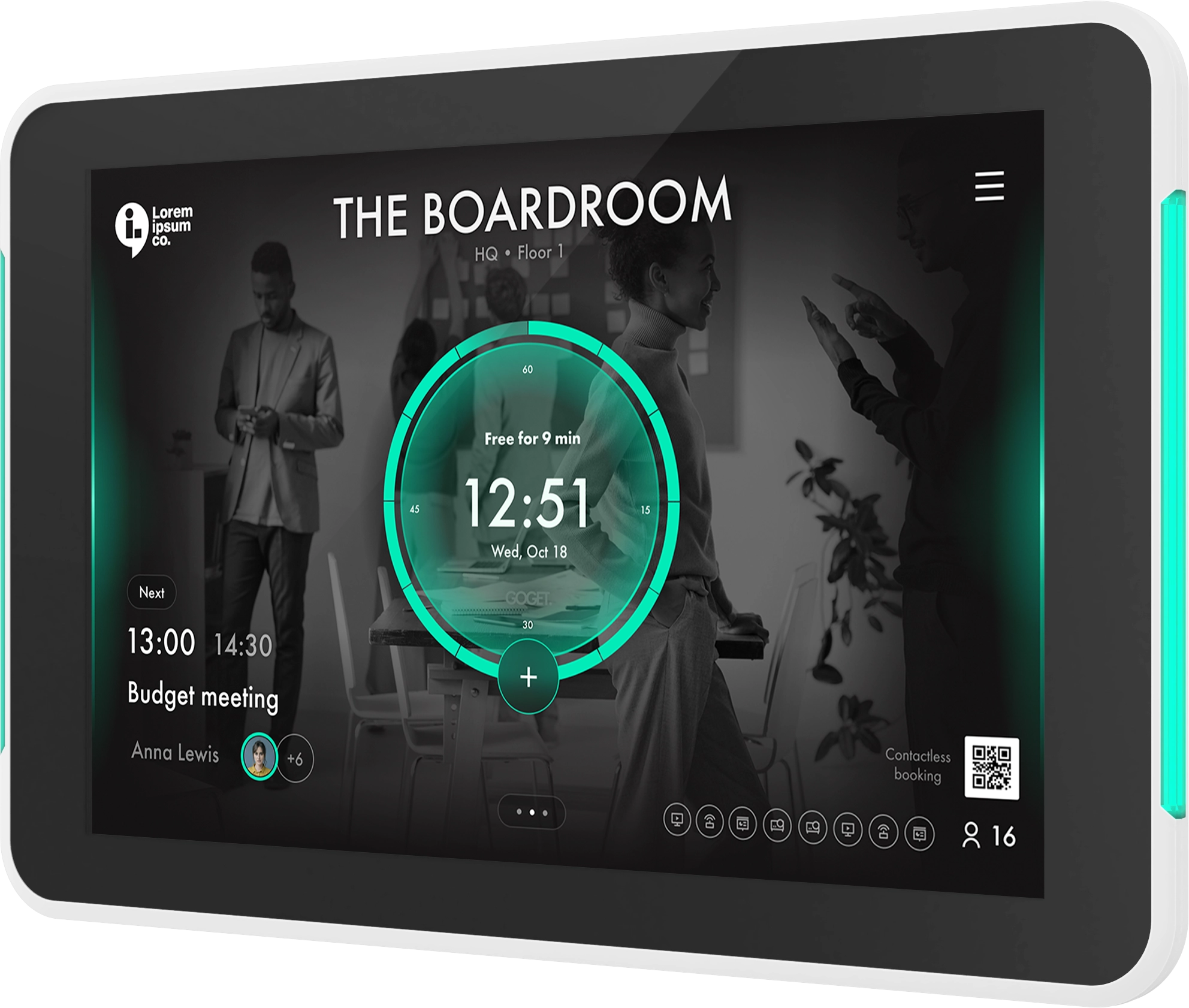
In flexible work environments, collaboration often becomes uneven. Employees in the office benefit from spontaneous conversations, while remote employees may miss important context. Use meeting room booking systems to coordinate in-person collaboration and ensure teams meet effectively.
This creates challenges such as:
- Information gaps
Important decisions may happen in informal office conversations, leaving remote employees out of the loop. - Reduced engagement in meetings
Remote participants may feel less involved, especially in poorly structured hybrid meetings. - Slower decision-making
When communication is fragmented, it takes longer to reach alignment.
How to solve it:
- Schedule collaboration on shared office days
This ensures teams are physically present when collaboration is most important. - Use digital tools to document decisions
Shared tools create transparency and ensure everyone has access to the same information. - Ensure hybrid meetings include remote participants equally
Use structured meeting formats and technology to give remote employees equal participation.
2. Burnout and Blurred Boundaries
Flexible work can blur the boundaries between work and personal life. According to Buffer, 22% of remote workers struggle with unplugging from work, which contributes to burnout. Remote and hybrid workers may:
- Work longer hours
Without clear separation between home and work, employees may extend their working hours. - Struggle to disconnect
Notifications and flexible schedules can make it difficult to fully switch off. - Experience isolation
Less face-to-face interaction can reduce social connection and increase feelings of isolation.
How to solve it:
- Set clear expectations for working hours
Define when employees are expected to be available. - Limit unnecessary meetings
Reducing meeting overload helps employees focus and reduces stress. - Encourage regular breaks and boundaries
Promote a culture where taking breaks is encouraged.
3. Hybrid Approach Creates Scheduling Challenges
Hybrid teams introduce coordination challenges that traditional offices did not have.
Employees need to know:
- Who is in the office
Without visibility, employees may come to an empty office, reducing the value of being on-site. - When meetings should happen
Hybrid schedules make it harder to coordinate meetings across teams. - Which spaces are available and whether it is worth commuting
Employees need to know if desks and meeting rooms are available before coming in.
How to solve it:
- Use the right tool
Desk booking software for hybrid teams can help employees coordinate office days and sit near colleagues. - Create clear hybrid policies
Define expectations around office attendance and scheduling. For more guidance on this topic, our article on office attendance in a hybrid workplace explains how to create attendance expectations without relying on rigid mandates. - Align teams around shared schedules on office days
Encourage teams to coordinate their in-office presence.
4. Flexible Work can Create Unequal Experiences
Not all employees benefit equally from a flexible work model.
Some employees:
- Have better home setups
Employees with dedicated workspaces at home may find it easier to stay productive than those without. - Have more visibility in the office
In-office employees may receive more recognition and opportunities.
How to solve it:
- Focus on outcomes, not presence
Evaluate employees based on results rather than where they work. - Ensure equal access to information
Use shared platforms to distribute information consistently. - Train managers to support hybrid teams
Managers must actively include both remote and in-office employees.
5. Hybrid work is not suitable for every role
Some industries require physical presence, such as:
- Healthcare
Patient care requires physical interaction and cannot be done remotely. - Manufacturing
Production roles depend on physical equipment and on-site work. - Retail
Customer-facing roles require in-person interaction.
Even within office roles, not all tasks are suited for remote work.
How to solve it:
- Define which roles can be hybrid
Create clear guidelines based on job requirements. - Adapt policies based on real needs
Avoid forcing a flexible work strategy where it does not fit. - Avoid one-size-fits-all solutions
Different teams may require different approaches.
Best Practices for Long-Term Success
To make hybrid work sustainable, organizations need more than flexibility—they need structure. The OECD has found that hybrid models work best when companies combine flexibility with the right tools, clear communication practices, and updated management approaches.
In practice, that means organizations should:
- set clear expectations for office days, availability, and response times
- design the office for collaboration, not just attendance
- use shared tools for desk booking, room booking, and workplace visibility
- train managers to run inclusive meetings for both remote and in-office employees
- review attendance patterns, space usage, and employee feedback regularly so policies can improve over time
Final Thoughts
The hybrid work model is not just a trend—it is a long-term shift in how work is organized.
When implemented correctly, flexible work can:
- Improve employee satisfaction
Employees gain flexibility and better work-life balance. - Reduce turnover
Organizations retain talent by offering flexible work options. - Increase flexibility and productivity
Employees can work in environments that suit their tasks.
However, a flexible work model only works when it is supported by:
- Clear policies
Organizations must define expectations and guidelines. - The right tools
Technology enables coordination and visibility. Solutions such as meeting room booking system, desk booking software, and workplace analytics tools play a key role in supporting flexible work. - Strong leadership
Managers play a key role in making flexible work successful.
Companies that treat flexible work as a strategic workplace model—not just a perk—are the ones most likely to succeed.
Ready to improve your hybrid setup?
Explore how our hybrid workplace solutions help you manage office space, simplify scheduling, and support hybrid teams—or book a demo to see it in action.