According to a study from Cisco, 82% of people admitted they are happier when they have the freedom to work from anywhere. It seems giving employees the power to decide where and how they work is a brilliant decision for employees and businesses, as employee wellbeing directly affects business performance.
Hybrid work has become a long-term shift in how organizations operate, with over 70% of companies adopting hybrid models as a permanent way of working. But should attendance be mandatory in a hybrid workplace? What are the benefits of encouraging employees to visit the office at least once a week?
In this blog, we’ll explore these burning questions, as well as how to create an attendance policy for your workplace, how to nail hybrid work scheduling, and more.
Is Office Attendance Important in a Hybrid Workplace?
Office attendance still plays an important role in a hybrid workplace—but only when it is intentional and aligned with how work gets done.
Collaboration and Communication
Office attendance is important for collaboration, especially for complex tasks that require real-time interaction. While digital tools support remote work, in-person collaboration enables faster decision-making, stronger alignment, and more effective problem-solving. Research shows that hybrid work requires deliberate coordination to avoid excessive virtual meetings and ensure that in-office time is used for collaboration and social connection.
Company Culture and Team Cohesion
The office plays a key role in maintaining company culture and building relationships between employees. Informal interactions, shared experiences, and spontaneous conversations contribute to stronger team cohesion and trust. Studies show that hybrid work can improve job satisfaction and employee engagement when organizations actively support social interaction and connection between colleagues.
Productivity and Focus
Hybrid work can improve productivity when employees have the flexibility to choose where they work best. Employees often report higher focus when working remotely and more effective collaboration when in the office. Research from Eurofound shows that hybrid working can improve both productivity and work–life balance when implemented with clear structures and guidelines.
Employee Preference and Retention
Employee expectations have shifted significantly, and flexibility is now a key factor in attracting and retaining talent. Hybrid work has become the most common arrangement among workers who can work remotely, accounting for around 44% of employees in the EU in eligible roles.
Given the benefits of office attendance, it’d be a smart idea to weave it into your hybrid working policy. So, how can you do this effectively?
How to Create an Attendance Policy for Your Hybrid Workplace
Creating an effective attendance policy in a hybrid workplace requires more than setting rules—it requires aligning employee flexibility with business needs, collaboration patterns, and workplace strategy.
Define the Reason Why Employees Should Return to the Office
An effective attendance policy starts with clarity. Employees should understand not just when they are expected to be in the office, but why.
Start by clearly defining why employees should come into the office. Without a clear purpose, attendance policies risk becoming arbitrary and disengaging.
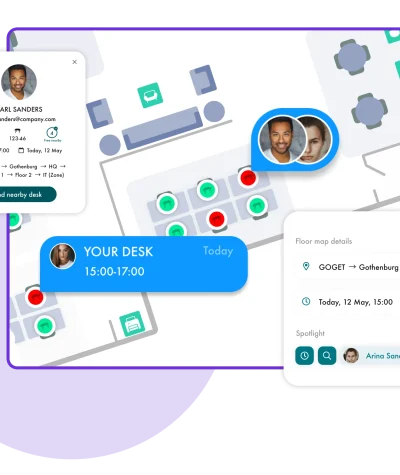
Research shows that employees are significantly more likely to come into the office when their manager or teammates are present, with attendance increasing by up to 29% in such cases. This highlights a key principle: office time should be designed around collaboration, coordination, and social interaction, not individual work that can be done remotely. A desk booking solution can help employees see when their colleagues will be in the office and book a workspace nearby.
Your policy should explicitly state when in-person presence adds value—for example:
- Team collaboration and workshops
- Onboarding and training
- Cross-functional alignment
Move from Individual Rules to Team-Based Coordination
Top-down attendance mandates often fail because they ignore how work differs across teams.
Research on hybrid work coordination and outcomes shows that effective hybrid models depend heavily on team dynamics, project needs, and coordination, rather than one-size-fits-all rules.
Instead of enforcing fixed days, allow teams to:
- Decide when in-person work is needed
- Coordinate schedules around key activities
- Adapt based on workload and project phases
This improves both attendance quality and employee autonomy.
Set Clear but Flexible Expectations
Clarity is critical—but so is flexibility. According to CIPD hybrid working statistics, 74% of organizations now operate hybrid working models, and many combine flexibility with minimum attendance expectations.
This supports a policy approach that:
- Provides guidance (e.g. 2–3 days per week)
- Avoids rigid mandates
- Allows variation by role and function
Clear expectations reduce confusion, while flexibility supports productivity and retention.
Align Attendance with Measurable Business Outcomes
Attendance policies should support outcomes—not just presence. A large-scale randomized study published in Nature found that hybrid work improves retention without harming performance, making it clear that presence alone is not a reliable productivity measure.
Define what success looks like:
- Faster decision-making
- Improved collaboration across teams
- Stronger onboarding and knowledge transfer
When attendance is tied to outcomes, it becomes a strategic lever—not an administrative rule.
Use Workplace Data to Continuously Optimize
Hybrid work patterns are dynamic, and your policy should evolve with real usage data. Research on hybrid attendance patterns midweek peak shows a clear “midweek peak” in office attendance, with most employees clustering their office days between Tuesday and Thursday.
To optimize your policy:
- Track occupancy and booking data with workplace analytics
- Identify peak collaboration days
- Adjust recommendations to balance usage
This ensures your workplace strategy remains efficient and aligned with actual behavior.
Communicate the Policy Clearly and Consistently
Even well-designed policies fail without clear communication. Guidance from CIPD flexible working communication emphasizes that clear communication is essential for building trust and ensuring employees understand expectations in flexible work environments.
Make sure to communicate:
- The purpose of office attendance
- How flexibility works in practice
- What is expected at company and team level
Clear communication reduces ambiguity and increases adoption.
Focus on Outcomes — Not Presence
Finally, avoid measuring performance based on physical presence. Research from Stanford hybrid work study productivity retention shows that hybrid workers are equally productive and significantly less likely to quit, with resignations dropping by 33% in the study.
This reinforces a key principle:
Being in the office is not the goal—better work is.
Make Office Attendance Work—Not Mandatory
If you want employees to return to the office, the focus shouldn’t be on enforcing attendance—it should be on creating a workplace people actually want to use.
That means making it easy to plan office days, coordinate with colleagues, and find the right space for the task at hand. When employees know who will be in, where they can sit, and when meeting rooms are available, the office becomes a place that supports their work—not interrupts it.
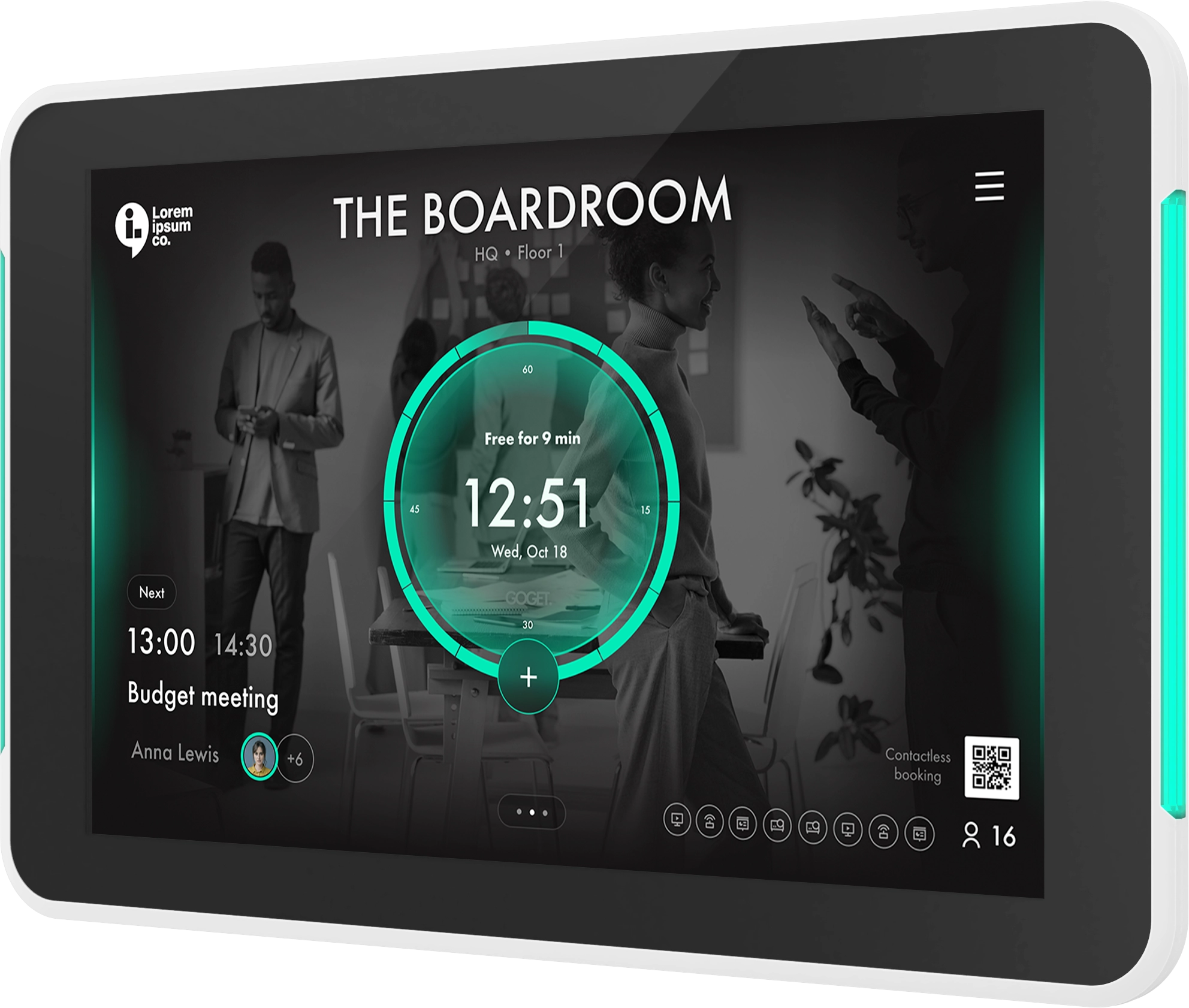
With the right tools in place, you can remove friction from the workplace experience and make office attendance feel purposeful rather than required. Solutions like desk booking help employees plan their time in the office, while room booking systems ensure meetings run smoothly. At the same time, workspace insights give you the data needed to continuously optimize how your office is used.
Instead of relying on mandates, you create an environment where employees choose to come in—because it genuinely improves how they work.
Explore how our solutions can help you build a more effective hybrid workplace, or book a demo to see how it works in practice.